
On November 9, 2026, I emailed Memorial University’s Communications department to seek clarification and ask questions as I continued investigating the university’s awarding of a $110,600 contract to ARC Organizational Inc. The principal person I hoped to hear back from was Chad Pelley, the Manager of Communications. Among other questions, I asked what procurement process was used, if it was competitive, and whether any conflicts of interest were declared. These questions arose because of conflict-of-interest concerns about Memorial President Janet Morrison.
On the morning of November 10, I decided to call Pelley, as I still had received no response. Our call was cordial enough, but it concluded with Pelley plainly stating what I had suspected for a while. He admitted that he was instructed not to even reply to my emails. He did not give much detail about the origins of the policy, other than to say it came from above him and that it is university policy to only reply to media organizations with editors. A policy like this struck me as detrimental to journalism and troubling coming from the province’s only university.
What I was hearing also struck me as odd. There is no formal requirement I could find from MUN that it only responds to media with editors. Not to mention that I received responses and comments from Memorial Communications in the past. When I made that argument to Pelley and asked whether it was a new policy, I recall him saying he would look into it and get back to me. Those seem to have been empty words, as I still have not heard back from him.
Editorial oversight
But could Pelley have a point about the need for an editor? I think not. Having an editor, a large operation, copyeditors, or other resources that journalists at large publications have is not a requirement. Editorial independence and editorial oversight are different things. A journalist can have the former without the latter. Editors can provide valuable oversight and fact-checking, but their presence does not automatically make reporting accurate, just as their absence does not make reporting illegitimate. An independent journalist can still examine documents, verify information, and publish stories without being employed by an established media organization. If having an editor were the bar to become a journalist, then we would exclude independent reporters and one-person media operations regardless of the quality or public-interest value of their work.
Throughout history, important journalism has been done independently of large media organizations. Seymour Hersh was a freelance investigative reporter in 1969 when he exposed the My Lai massacre during the Vietnam War, revealing the killing of hundreds of Vietnamese civilians by American soldiers in 1968. Initially, his reporting was rejected by major magazines. However, a small anti-war news agency distributed his work, and it became international news. Hersh was personally opposed to the war, yet his scoop was based on facts and extensive investigation. He even went on to win the 1970 Pulitzer Prize for International Reporting. A few years earlier, I. F. Stone published the aptly named I. F. Stone’s Weekly. He used that independent newsletter to become one of the early journalists to challenge the United States government’s version of events surrounding the Gulf of Tonkin incident in 1964. He used public records to question the narrative used to justify escalating the Vietnam War. His reporting was analytical and skeptical, but also openly opinionated.
Journalistic neutrality
Can I still be a journalist and advocate for certain causes? Surely we have all heard mainstream media outlets claim neutrality and impartial news coverage. We may have even implicitly or otherwise seen that as a principal standard of journalism.
But journalism does not require neutrality. Journalists can still have an opinion and be advocates for causes they believe in. It is perfectly reasonable that a person could advocate for causes like no tuition hikes and still practice journalism separate from those beliefs, or even use journalism to advance those points. This is different from traditional reporting. Having an opinion does not mean abandoning accuracy or evidence. A journalist can oppose tuition increases while obtaining documents and reporting facts.
Turning journalism into a credentialed service would also be misguided. When one journalist is excluded, it hurts the entire field. There should not be a rigid test for what constitutes a journalist. Journalism is not a credentialed profession like law or medicine, where individuals must obtain a license to practice. And who would even be the issuer of credentials? The institution which is to be investigated? What would happen if we allowed the subjects of a story to essentially decide who is and who is not a journalist? Wouldn’t institutions, under the guise of seemingly reasonable policies, refuse to recognize journalists whose reporting they dislike? Such a precedent could undermine the independence of journalism. It would give institutions considerable power to determine who gets access to information. It would be especially wrong for a publicly funded institution to do it. Journalism should be judged by the content, not by whether the institution being investigated recognizes the person doing it.
More important here than anywhere else
I will go even further and say that, in a small province like Newfoundland and Labrador, having independent reporters is of the utmost importance. Only a few profit-driven or government-subsidized media outlets exist, and it is a tough business. The Telegram has struggled and experienced significant newsroom cuts, leaving it with a smaller team of journalists. Independent media operations are even more important. There may be stories that mainstream outlets do not have the resources to pursue. Entire organizations could operate with little scrutiny, including those funded by our tax dollars. I am sure a lot of organizations would love to exist like this. But that convenience would come at the expense of public scrutiny and accountability.
A one-person journalistic endeavour has unique advantages. Overhead and payroll costs are not necessary, and their absence can even be an advantage. A one-person operation can pursue a story and give it the attention it deserves, particularly subjects the mainstream media would not dedicate resources to. Not having management concerned about costs is a major asset. Independent reporters can spend time investigating issues without having to justify the expenditure of resources to newsroom management. They can also focus on areas that larger media organizations may only cover occasionally. Large newsrooms may have advantages, but the flexibility of independent journalism is valuable, especially in a province with limited media resources. Different forms of journalism could complement one another rather than be treated as competing definitions of what constitutes legitimate reporting. As an independent journalist, I am also not beholden to any institution, organization, or individual.
My reporting
Much of my reporting consists of leveraging Access to Information and Protection of Privacy (ATIPP) requests. This form of reporting is consistent with journalistic principles. It is important for the public to have the information it needs to have discussions and debates about important issues. Without the necessary information, it is less fruitful, and democracy is weakened. I have filed and published hundreds of ATIPPs since 2017.
One of my inspirations is a reporter called Jason Leopold, who uses the United States Freedom of Information Act (FOIA) to uncover secrets at government agencies. He has filed more than 13,000 public records requests over two decades. Notable records Leopold obtained and published from freedom of information requests include thousands of pages on the CIA’s post-9/11 enhanced interrogation program and Vladimir Putin’s assassination targets. He is known to be relentless. Former Memorial President Vianne Timmons also called me “relentless” following my 2021 protest against her. She was trying to place me in a bad light, but I see it as a compliment.
I would argue this form of journalism is also consistent with the spirit of the ATIPP Act. I am reminded of the debates that took place in the Newfoundland and Labrador House of Assembly over a decade ago and the lines that sprung from them, with one in particular. Gerry Rogers, then MHA for St. John’s Centre, spoke on April 28, 2015, during debate on Bill 1, the ATIPP Act. She stated, “I believe that this province is bursting at its seams with hope. It is the dawning of a new age of citizen activism.”
Recent examples of my reporting made possible through ATIPP include an investigation report that former Memorial President Neil Bose violated the university’s conflict of interest policies and procedures, many emails containing details behind current President Morrison’s decision to sell Memorial’s UK Harlow Campus, and a $228,142 purchase order for an enrolment management plan. Nevertheless, there has been a pattern in Memorial University’s approach towards my reporting. They have called my news site a blog, which strikes me as an outdated term and, I believe, diminishes the importance of what I do. They have claimed my journalism is bad behaviour towards individuals. They also filed an application with the Office of the Information and Privacy Commissioner to disregard my ATIPP requests, which the Commissioner thankfully rejected.
At the end of the day, I am a journalist and Memorial University is a public university. I see it as my duty to report on them, and I believe they should be open to such reporting.
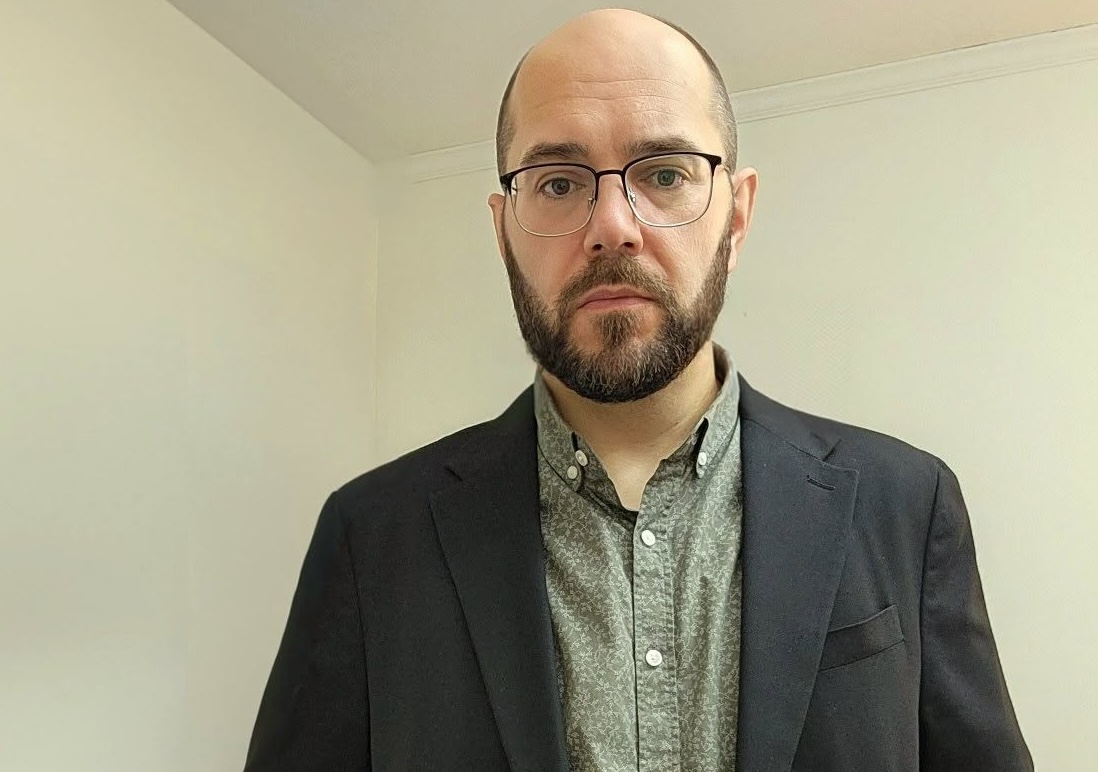
Matt Barter is a graduate of the Humanities and Social Sciences Faculty at Memorial University of Newfoundland, holding a degree in Political Science with a minor in Sociology. He enjoys reading thought-provoking articles, taking walks in nature, and volunteering in the community.

Leave a Reply