
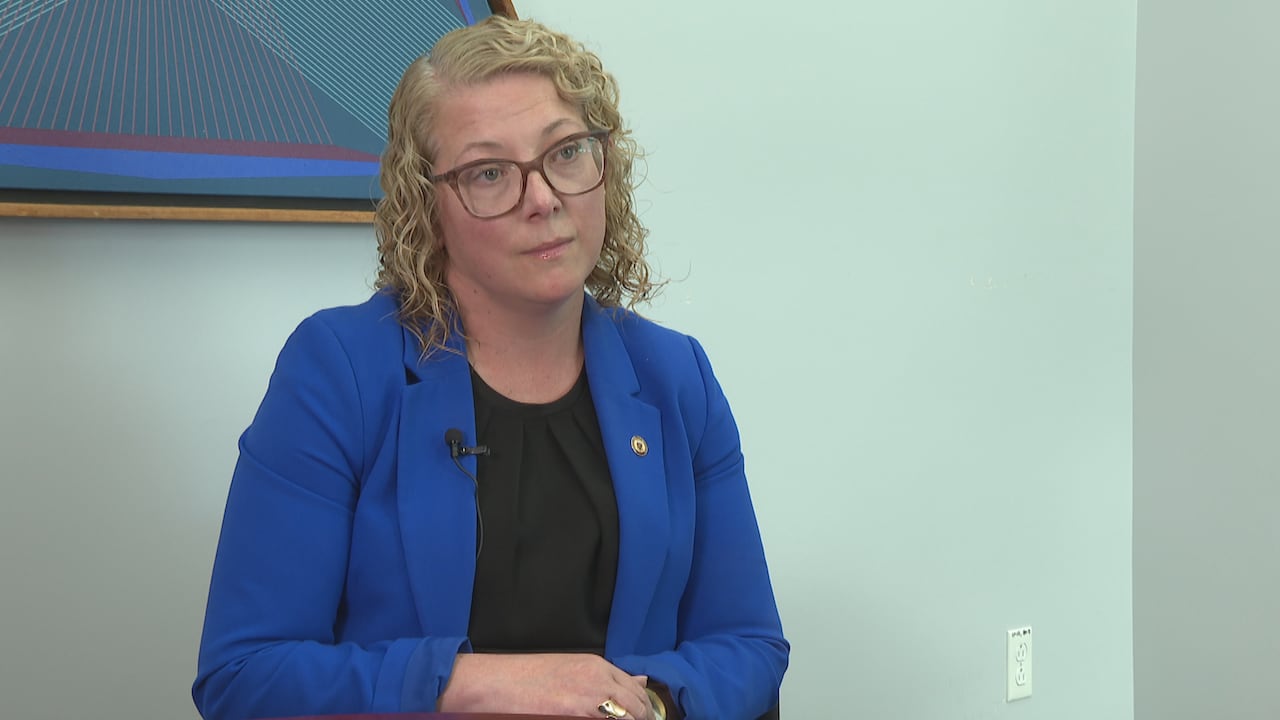
Angie Clarke’s appointment as interim registrar at Memorial University raises questions about the qualifications, experience, and judgment expected of individuals occupying senior administrative positions at the institution.
Clarke has spent more than two decades advancing through Memorial University’s administrative ranks, primarily at the Marine Institute. Her career reflects extensive experience in student affairs.
However, professional advancement, academic credentials, and years of administrative experience should not automatically be regarded as sufficient evidence of sound judgment or suitability for permanent appointment.
Clarke’s record of decision-making should be examined to determine whether it demonstrates the judgment and accountability expected of someone entrusted with significant institutional responsibilities.
Her involvement in Memorial University’s relationship with OceanGate provides a basis for examining that question.
According to emails obtained through access-to-information legislation and reported by The Independent, Robert Shea, then Memorial’s vice-president responsible for the Marine Institute, sent OceanGate CEO Stockton Rush an email just hours after meeting him, stating that “the ‘proverbial doors’ of the Marine Institute at Memorial University are open!”
Clarke, then the incoming associate vice-president responsible for academic and student affairs, responded enthusiastically, writing: “Amazing what they are doing!”
Clarke subsequently took the lead on the OceanGate file, and a memorandum of understanding was exchanged in December 2022.
On March 22, 2023, the Marine Institute publicly announced a partnership with OceanGate offering potential student internships supporting the company’s Titanic expeditions.
The announcement described opportunities involving submersible maintenance and operations, along with storage and workspace for Titan and OceanGate personnel. Clarke presented the partnership as an opportunity for students to gain practical experience in ocean exploration.
Such publicity could reasonably have given members of the public greater confidence in OceanGate’s operations. Although a university partnership does not constitute a safety certification, the credibility associated with an educational institution should not be underestimated.
Journalist Laura Trethewey raised concerns in The Walrus, asking: “How could Canada’s premier ocean-technology institute, staffed by engineers and technicians trained in the exact fields where OceanGate had failed so prodigiously, miss the warning signs?”
Trethewey also speculated that Memorial may have been “simply captivated by the swashbuckling Stockton Rush and the sensationalism of diving to the Titanic—enough to ignore the dubious ethics and scientific value of charging passengers to visit the same tragic shipwreck again and again.”
The Transportation Safety Board (TSB) released report M23A0169 on June 17, 2026, examining the Titan disaster of June 18, 2023. Its findings described serious failures involving engineering, monitoring, and organizational judgment.
The investigation found that OceanGate had never validated whether Titan’s completed carbon-fibre cylinder possessed the material properties assumed in its design. Construction and testing did not follow standard engineering practices, leaving the company unable to establish how long the hull could safely withstand repeated dives to Titanic depth.
Investigators also identified structural weaknesses, including waviness in the carbon-fibre layers and visible porosity, along with potential defects introduced during manufacturing, operations, storage, and transportation. The TSB concluded that these factors likely contributed to progressive structural failure as damage accumulated during successive dives.
These findings do not establish that Clarke or other administrators knew about Titan’s structural deficiencies before the disaster. However, they demonstrate the importance of careful scrutiny when establishing relationships with companies involved in complex and potentially dangerous activities.
Memorial has offered an explanation for its approach.
The Marine Institute told The Independent that the memorandum of understanding was general and non-binding, with additional due diligence to be undertaken for specific arrangements.
The proposed student internships never proceeded because schedules did not align. Since there were no plans for students or staff to travel aboard Titan, the institute stated that there was “no rationale to vet OceanGate.”
That explanation raises significant questions about the judgment exercised in developing and publicly promoting the partnership.
The Marine Institute’s position suggests that it viewed the need to vet OceanGate primarily in terms of whether students or employees would travel aboard Titan.
However, a university’s responsibility should extend beyond determining whether its own students or employees face direct physical risks.
By publicly announcing the partnership, Memorial associated its name, reputation, and educational mission with a private company conducting technically complex deep-sea expeditions.
That association alone should have warranted an appropriate assessment of OceanGate’s technical credibility and operating practices.
Clarke’s involvement is particularly relevant because she took the lead on the OceanGate file and publicly promoted the proposed partnership.
Given her leadership role in developing the partnership, Memorial should explain what responsibility she had for evaluating OceanGate and whether she sought advice from specialists with relevant technical expertise before the relationship was publicly announced.
Clarke’s professional background also deserves examination.
She spent more than 23 years at the Marine Institute, progressing through several administrative positions. Beginning as a student liaison officer in 2003, she subsequently served as a placement officer, enrolment management coordinator, director of student affairs, and associate vice-president of academic and student affairs.
More recently, she was appointed interim registrar at Memorial University.
Her association with the university extends back even further. As an undergraduate student, she worked as the coordinator of the Student Volunteer Bureau.
Clarke holds a bachelor’s degree in biochemistry, a master’s degree in post-secondary studies, and a doctorate in higher education leadership.
Her experience in enrolment management and academic administration is relevant to the responsibilities of a university registrar. However, relevant experience should be considered alongside an individual’s record of decision-making, accountability, and ability to exercise independent judgment.
I have previously criticized student affairs as a profession increasingly concerned with expanding its own administrative structures, credentials, professional associations, and career pathways.
In my reporting on Jennifer Browne’s application for an adjunct professor appointment, I examined a reference letter from Donna Hardy-Cox that highlighted the Memorial Director of Student Life’s national and international connections within the student affairs profession. The letter illustrated the importance placed on professional networks and involvement in organizations dedicated to advancing the student affairs field.
My concern is that universities can become so invested in professional advancement, administrative credentials, and institutional relationships that they place insufficient emphasis on the quality of decisions made by those advancing through their administrative structures.
Andy Merrifield’s criticism of professionalism is relevant here. Merrifield questioned professional practices that encourage conformity and compliance with established structures of power.
In my view, university administration too often rewards precisely that conformity.
The ability to adopt the language, expectations, and behaviours associated with an administrative position can be mistaken for sound judgment.
Administrators can accumulate authority and institutional trust by satisfying the expectations of those above them rather than challenging decisions or questioning established practices.
Clarke’s progression through successive administrative positions illustrates the career opportunities available within university administration.
For professionals working in student affairs and higher education administration, becoming a university registrar can represent the culmination of decades of career advancement.
But reaching such a position should not be regarded simply as the next step in a successful administrative career.
A permanent appointment should require a careful examination of an individual’s qualifications, professional accomplishments, decision-making record, and willingness to exercise independent judgment.
The OceanGate partnership raises questions that should form part of any such assessment.
The Marine Institute is a specialized educational institution dedicated to marine-related fields, including marine engineering, ocean technology, and nautical science.
Clarke’s academic qualifications do not establish specialized expertise in submersible engineering.
This raises a broader question about whether senior administrators at specialized institutions should be expected to possess academic or professional expertise in at least one of the institution’s core disciplines.
The Marine Institute’s statement that there was “no rationale to vet OceanGate” makes that question particularly relevant.
The ability to seek advice from others, critically evaluate proposals, and exercise sound administrative judgment is important to the role of a university registrar.
A registrar may be required to make or oversee decisions involving academic regulations, student records, institutional policies, and competing interests within the university.
Those responsibilities require more than familiarity with administrative procedures. They also require independence, accountability, and the willingness to question decisions when circumstances warrant.
Before considering Clarke for permanent appointment, Memorial should be able to explain how her previous administrative responsibilities and decision-making record will be evaluated.
That examination should include her involvement in the OceanGate partnership and the reasons the Marine Institute considered vetting the company unnecessary.
It should also include a fair assessment of her relevant qualifications, accomplishments, and performance in the interim registrar role.
Memorial should also be transparent about the qualifications, selection criteria, and appointment process for its permanent registrar.
If the university intends to consider Clarke for the position, her candidacy should be assessed against clear standards rather than an assumption that years of service and advancement through administrative ranks establish suitability for permanent appointment.
The broader issue extends beyond one administrator.
Universities should not treat senior administrative appointments as rewards for longevity, professional networking, or successful progression through institutional hierarchies.
They should be based on demonstrated qualifications, relevant experience, sound judgment, and accountability for previous decisions.
Clarke’s involvement in the OceanGate partnership provides a legitimate reason to examine those standards before any decision about a permanent appointment.
The question is not whether an administrator has successfully climbed the institutional ladder.
It is whether that administrator has demonstrated the judgment and accountability necessary to justify being entrusted with the responsibilities at the top.
Matt Barter is a graduate of the Humanities and Social Sciences Faculty at Memorial University of Newfoundland, holding a degree in Political Science with a minor in Sociology. He enjoys reading thought-provoking articles, taking walks in nature, and volunteering in the community.


Leave a Reply