
On November 4, 2026, CBC’s Julie Skinner interviewed Memorial University professor Gerard Curtis about the university’s decision to hire an American organization to develop an enrolment strategy. On The Go host Krissy Holmes introduced and closed the segment.
Krissy Holmes: Memorial University has reportedly paid an American nonprofit nearly $230,000 to provide the university with an enrolment strategy. This, according to files obtained through an access-to-information request by local reporter and MUN watcher Matt Barter. One longtime professor at MUN’s Grenfell Campus says that’s a quarter of a million dollars the university just cannot afford, and he doesn’t think that the president should be spending any money on outside consultants. He spoke with On The Go’s Julie Skinner late this afternoon.
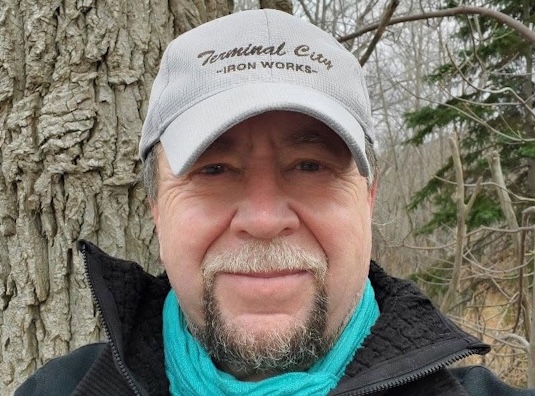
Gerard Curtis: Hi, I’m Gerard Curtis. I’m a professor at Memorial University at the Grenfell Campus. I teach art history, visual culture, and I also sit on the union executive and have done social environmental activism on top of that. This is my 34th year, so I’m one of the longer-serving faculty members at Grenfell.
Julie Skinner: We’ve spoken with you in the past about some of MUN’s recent decisions, like its plan to close its Harlow campus. I want to ask you today about the plan to work with this American group. Online, it’s called a nonprofit association, but it appears to be charging upwards of $230,000 for a service to develop an enrolment strategy. Talk to me about your concerns with that, MUN hiring this group.
Gerard Curtis: Sure, there’s a few concerns. It’s a quarter of a million dollars we can’t afford at this moment. This is on top of – they just put out another call for another consultant when the auditor general warned the university about using outside consultancies and the amount of money. They said there’s another call just went out two days ago for more consultancy work.
So it’s problematic in the sense of, we were warned about using consultants. The union has been warning the university about consultancies and that these are services that can be offered through the Senate of the university. That’s part of our job. I was a senator until recently. These are services that can be offered by the Registrar’s Office. This is work the president is supposed to be doing, not outside consultants. So it’s sort of a shifting responsibility.
It’s also a type of Trojan horse. It’s an end run around the Senate, as is this new consultancy service for strategic planning. It allows the president, the vice-provost, the Board of Regents to have an effectively an outside source that they will say consulted effectively with the university, but really they can take the mandate of that organization.
It’s an American organization in this time of tariffs, in this time when we’re trying to support Canadian endeavours. It’s just unbelievable that they went this route, that they were so, you know, bald-faced that they couldn’t see in front of themselves what they were doing. And there are Canadian companies that could have done this. Not that Canadian companies should be doing it, not that we should have more consultants, but rather there are Canadian companies that could have done this.
So there’s a litany of disasters here that are just unfolding under the president and the Board of Regents. And why I said I think, frankly, we should get rid of both of them and start anew.
Julie Skinner: You mentioned not even really needing a Canadian firm to do this work, but given what we know about enrolment issues at Memorial University, do you see it being a worthwhile practice to put out a call for something like this to help the university, guide it in making decisions on what the strategy should be? Because we know the university is struggling with enrolment.
Gerard Curtis: Yeah, no, this is something we’ve known for a long time. So this is not something a consultant is going to provide us with any new information on. There’s demographic shifts, but really this is where it’s a job of the president, not the consultant, but the president, working with the Board of Regents to provide. We hired them because we thought they had the skills and expertise to provide us with, you know, a strategy, a consulting plan, enrolment plans, working with the Registrar’s Office, working with the Senate.
This is a president who, remember, dissolved the Senate at Sheridan College, so they don’t like that sort of broad consultancy or collegial process. They dissolved the committee that was supposed to create collegial consultation. And really that’s instead of consultancy, it’s that collegial consultation, the experts within the university. We have people in business who are experts in these areas. They should be being consulted. The Senate members should be being consulted.
Myself, as a teacher, you know, I know the president doesn’t have much teaching or research experience, but she should be consulting those with research and teaching experience to discuss where they see things going forward. And I could point out enrolment problems at this university and areas and venues to look at, but they constantly defer to outside consultancy. And, like I said, an American firm, which is not used to our Canadian form of education, the way we are funded by the federal government, our bicameral system.
These are complex issues, and we understand them within the university. That’s our job. And it’s like she wants to give up our job, bring this Trojan horse in, and effectively create an end run so she can carry out the mandate she feels she wants to. It’s a little bit oligarchical. I feel sometimes like I’m living in a Trumpian dystopia here at the university as well, with similar sorts of characters.
Julie Skinner: Well, you have an interesting perspective, like you said, three decades, you know, on the inside of things. I wonder, on the west coast, what hurdles, what enrolment challenges are you seeing at play at MUN? How are you seeing it this year?
Gerard Curtis: Well, this year, in fact, we’re seeing a slight increase, so, you know, that’s a positive sign. I tend to think we do need more support of our recruitment strategies that we have here at Grenfell. But I think part of it is, I know years ago I did this, you know, part of it is getting us out into the community, really, for enrolment and saying, you know, for example, in our theatre program, we have the best and the only full stagecraft program east of Montreal, and we don’t promote that enough. We don’t get that out.
So I can directly say I don’t need a strategic consultant to come in and maybe ask me one day and then bury deep in a report something about, you know, well, strategic planning for theatre or visual arts. I would say, you know, I can talk to, the president’s job is to deal with this, the Senate’s job is to deal with this, and I can say directly what we need.
Julie Skinner: Well, speaking of direct, we’re hoping to speak with MUN shortly. If you had a message for them, what would you want them to hear from you?
Gerard Curtis: I tend to think, stop using consultancies. Stop using American consultancies. It’s a disgrace to our Canadian drive at the moment and the links that we’re doing. And, you know, like, we need really shop-floor, you know, good management at this university. I think the Board of Regents has failed us on this and their hires for the presidency, what’s going on there, and I think we need definitely a drastic change in administration.
Krissy Holmes: Gerard Curtis is a longtime professor at MUN’s Grenfell Campus, and he also sits on the union executive. Now, in the meantime, we’ve also reached out to Memorial University about its decision to hire an American group to provide an enrolment plan. That group is called the American Association of Collegiate Registrars and Admissions Officers, or AACRAO.
Anyway, we’re going to keep the conversation going tomorrow on the show when I speak with Angie Clarke, the university’s registrar. She’s going to join us here live. And we’d love to hear what you think about what you just heard there, of course, from Mr. Curtis. Should Memorial University be spending hundreds of thousands of dollars on an enrolment strategy, especially when those hundreds of thousands of dollars are going to an American company?
Love to hear what you think. You can call the On The Go talkback line, 709-576-5207, or 1-800-465-6846, and feel free, as always, to send us an email. We love hearing from you, onthego@cbc.ca.

Leave a Reply